Dark NoonFeaturing Mandla Gaduka, Katlego Kaygee Letsholonyana, Lillian Tshabalala-Malulyck, Bongani Bennedict Masango, Siyambonga Alfred Mdubeki, Joe Young, and Thulani ZwaneSt. Ann’s WarehouseJune 7, 2024 – July 7, 2024production site Projection screens, […]
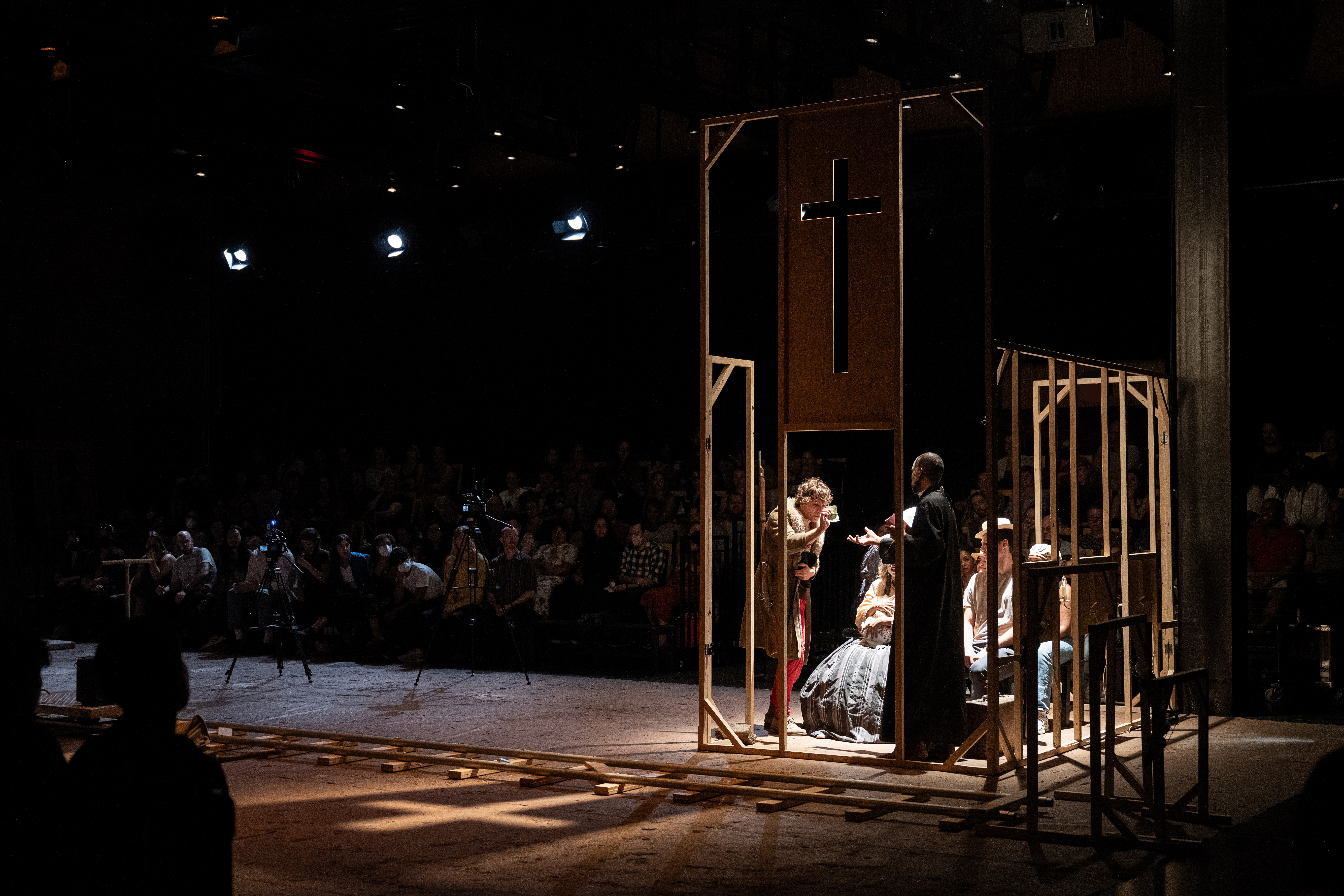
[L-R] Siyambonga Alfred Mdubeki, Joe Young, the cast of Dark Noon, and audience participants. Photo: Teddy Wolff.
Dark Noon Featuring Mandla Gaduka, Katlego Kaygee Letsholonyana, Lillian Tshabalala-Malulyck, Bongani Bennedict Masango, Siyambonga Alfred Mdubeki, Joe Young, and Thulani Zwane St. Ann’s Warehouse June 7, 2024 – July 7, 2024 production site
Projection screens, football, ten gallon hats, women and indigenous populations oppressed by the men who are stronger and more violent — Dark Noon‘s treatment of the American myth of western expansion and individualistic opportunity, haunts in its simplicity, aggravates in its outsider viewpoint (“hey this is our history” some local residents might say, who are you to tell it, then they will rethink that assessment), and enchants in its theatrical creativity.
The South African creators of this expansive production begin their history at several points of remove. The content of Western films and television, with their stories of cowboys as lone heroes with little humor and great resolve. The female characters of history and of these early 20th century films and television shows were adjuncts, there to serve the needs of the cowboys — they ran the brothels and the Harvey Restaurants and the saloons but weren’t partners in the project of western expansion. The native peoples were friendly until the adventuring cowboys then settlers wanted what the tribal members had — their lands, their cattle, their natural wealth — then all bets were off. American children and adults grew up with the mythical versions of western expansion all around them on television — cowboys good, natives bad and in need of control. South African viewers, we learn in this piece, had a more limited exposure to televised storytelling, and developed their own understanding of what the western storytelling on television and film reveal about the American original story, underscoring white dominance over other residents and immigrants alike.
The Danish director Biering, so the press notes and playbill essays inform us, began this project as a piece of improvisation that retains that germ. As it is presented today, Dark Noon is a multi-layered performance in which each actor plays multiple roles and in the course of the play build the sets, gradually, with great theatrical logic, in the great maw of a space at St. Ann’s Warehouse with almost all of the internal seating ringing the central arena. We watch American apartheid take root, we watch a town be erected, we see railroad tracks laid, all with a theatrical bent and ready humor, within a melancholy-serious framework. We are watching a system of oppression be erected, and especially American audiences overexposed to the cowboy myth as it has been fed to us will feel the story in layers, charmed by the set building then feeling in a whole new way the pain of those who provided the forced and unpaid labor.
There are scenes of rape, of murder, of horseplay, of football, of church meetings, of scheming. And the actors stop from time to time to share their personal thoughts on the effect on their own lives of the brutality of the western film genre. This work is experiential and reflective, durational (it is lengthy and occasionally audience participatory) and haunting. We laugh with some slapstick, and grimace at the violence, and come away with a serious analysis of the American story of western expansion, how we have been telling that story on screen, and how that storytelling is understood by another culture.


 urban excavations